Fear. Love. Darko.
Time loops, rabbit masks, and the movie that refused to die.

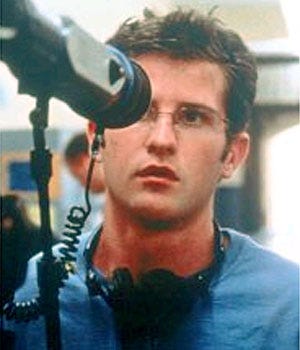
I was working at 525 Post Production, making cheese and cracker plates and getting food for “Weird Al” Yankovic. And I would go home during the day and would be writing Donnie Darko.- Richard Kelly (writer/director)
When Donnie Darko was released in October 2001, it barely made a ripple. A film about a jet engine crashing into a house right after 9/11 felt “too soon”. The studio had no idea how to market a teen movie that was a sci-fi, part suburban satire, fever dream by way of David Lynch. It should have disappeared.
Instead, it became immortal. On DVD and in midnight screenings, Richard Kelly’s debut found its audience. Today, Donnie Darko is both endlessly debated and deeply personal. Is it time travel? Mental illness? A metaphor for adolescence? The answer, frustratingly, might be yes. That’s why it endures, not as a solved riddle, but as a movie you live inside (unless you watch the Director’s Cut)
We’re diving into this cult classic on this week’s Unspooled. Listen to the full podcast here and read on for some things we didn’t have time for.
Kelly’s First Time
Richard Kelly completed filming Donnie Darko in just 28 days. The same stretch in which Frank predicts the world will end. As he joked later, the script took 23 years of life experience to write… and just 28 days to type.
When Richard Kelly finally scraped together funding for Donnie Darko, he had no real filmmaking experience. To pull off wormholes, jet engines, and a giant rabbit suit on a tight budget, he surrounded himself with veterans who knew how to bend reality into something cinematic. “We were totally green, completely out of our depth,” producer Sean McKittrick admitted, “but we were smart enough to hire good people.” One of those people was cinematographer Steven Poster, who first met Kelly pacing nervously around a bare Venice apartment. Poster told him, “I am here to be your director of photography. You are the director. All of my experience is on the line for you.”
Kelly insisted on shooting anamorphic widescreen, a costly indulgence for an indie. Poster improvised: he told producers that a new Kodak film stock would balance out the need for more lights, and that anamorphic’s framing would let him hide cheap ceiling rigs. “It was all bullshit,” Poster laughed later, “and it worked.” That mix of conviction and bluff carried them through production.
But nothing tested that faith more than Frank the Bunny. Kelly had sketched the mask, but the early designs he was shown looked like a goofy Easter mascot. He pushed back. “No,” he told them, “it needs to look disturbing and animalistic.” Production designer Alec Hammond and costume designer April Ferry translated Kelly’s vision into something uncanny, “between classic horror movie mask, kid’s made Halloween costume, and something you’re just not quite sure of,” Hammond recalled. The first time Frank stepped onto set in the hallways of Loyola High School, Poster lit him, and the room went still. Crew members found themselves unsettled by the presence of a rabbit head that glowed in the dark.
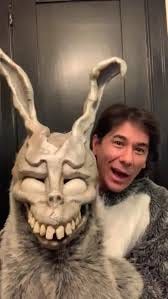
“They made me look like an otherworldly creature.” - JAMES DUVALL
That uneasy mixture of childlike costume and nightmarish menace is exactly what makes Frank unforgettable.
Donnie Darko vs. The Ad Men
In a post 9/11 world, the studio was afraid that this movie would be viewed as a bummer. So Newmarket and Richard Kelly tried to reframe the movie as a teen horror, like Final Destination or The Faculty. It didn’t work. The movie grossed less than $1 million in theaters.
“You have so much trust in someone when they write something so extraordinary as his script. … I was so excited.”Drew Barrymore (Karen Pomeroy / producer)
PULL THE CATCHER!
One of Donnie Darko’s sharpest touches is Drew Barrymore’s teacher, Karen Pomeroy, assigning Graham Greene’s short story The Destructors. That wasn’t Richard Kelly’s first choice. He originally wanted the kids to read Catcher in the Rye—a perfect fit for alienated teens and suburban dread but the Salinger estate has always refused permissions. So Kelly pivoted to Greene’s story, which eerily mirrors Donnie’s own chaos: kids destroying a house simply to watch it fall.
Here’s the twist: the Graham Greene estate also raised objections. The references made it into the theatrical cut, but when the film first hit home video in the U.S., some releases had to alter or remove them. Only later, as the film’s cult status grew, were the Greene elements restored on DVD and Blu-ray.
So one of the film’s most thematically potent Easter eggs, Donnie’s homework assignment doubling as prophecy briefly flickered in and out of existence, like the tangent universe itself.
“Okay, Ok hear me out…”
The meaning of the film has created many fan theories, here are a few of our favorites.
The Schizophrenia Theory: Some fans reject time travel entirely, reading the whole movie as Donnie’s psychotic break. Frank isn’t a spirit guide but a hallucination, and the jet engine is just a metaphorical death wish.
The Loop Theory: Others argue Donnie has been through this cycle countless times. Each 28 day loop teaches him how to get it “right,” ending with his acceptance of death. (Basically Groundhog Day, but if Punxsutawney Phil was a scarier rabbit.)
Grandma Death as the Real Author: Some fans believe Grandma Death isn’t a bystander but the one pulling strings, manipulating Donnie to collapse the tangent universe.
Jet Engine Paradox: One of the most debated bits—if the jet engine that kills Donnie comes from the tangent universe, how can it exist in the primary one? The fanbase has built entire flowcharts to answer this, some longer than the screenplay.
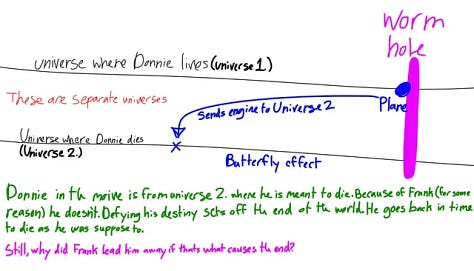
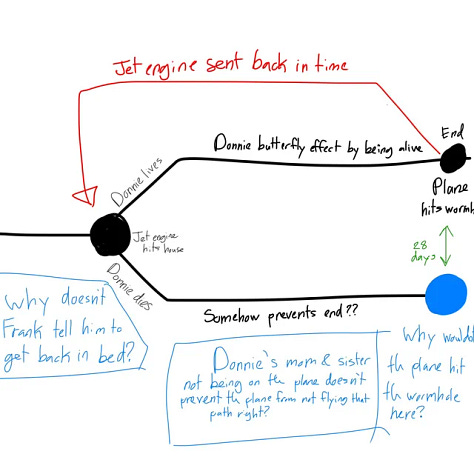
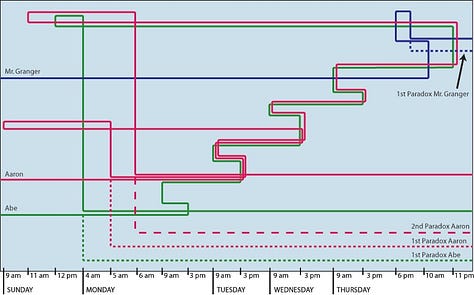
Here’s a nice nod to alot of the “hidden” clues in the film.


“I remember pulling over to the side of the road to finish reading Richard’s script and being mesmerized. It was clearly influenced by classic directors—Ron Howard, Steven Spielberg—but with this strange psychosis. It beautifully captured the experience of moving into adulthood: the world that felt so solid becoming movable and liquid. I thought, “This is what my adolescence felt like,” although I don’t speak, and have never spoken to, rabbits.”- Jake Gyllenhaal
Ferris Bueller’s Neighbor
The Darko family house is only about a mile from Ferris Bueller’s house. Yep Donnie and Ferris grew up in the same neighborhood (kinda).
Yes Ferris was a Chicago kid and Donnie was more SoCal but when it came to establishing shots they were only a 3 minute walk from each other.
Two visions of teenage America, one manic wish fulfillment, the other apocalyptic dread, shot on the same street.


A Disc for Every Time Line
Donnie Darko is a cult hit and that meant studios could make sure the fans got a new reason to buy a DVD every few months. We tried to track down every version. Did we miss any?
2002: First DVD Release Newmarket put it out barebones: theatrical cut only, minimal extras. Sales were modest but steady—this disc is what really kicked off the cult.
2004: Director’s Cut DVD Two years later, a new edition appeared with 20 minutes of extra footage, text from The Philosophy of Time Travel, and commentary tracks. This is the version that divided fans (see below).
2004: Limited Edition Gift Set In the U.K., there was a 2 disc special edition tin with postcards, a booklet, and extra features.
2010: “10th Anniversary Edition” Fox Home Entertainment put out a remastered transfer with both cuts, plus documentaries and deleted scenes. Fans complained about heavy handed digital noise reduction, though.
2016: Arrow Films 4K Restoration Arrow in the U.K. and U.S. released a painstaking 4K scan supervised by Richard Kelly. Gorgeous picture, both versions of the film, piles of extras (new commentaries, interviews, docs). Widely considered the definitive version.
2019: Arrow Limited Edition Steelbook A collector’s reprint of the 2016 restoration, this time with deluxe packaging and some new artwork.
2021: Arrow 4K Ultra HD The ultimate version to date—native 4K of both the Theatrical and Director’s Cut, Dolby Vision HDR, and all the Arrow extras.
The Director’s Cut: Clarity vs. Cult
In 2004, Richard Kelly released a Director’s Cut of Donnie Darko, adding about 20 minutes of footage and inserting passages from The Philosophy of Time Travel to underline the mechanics of the Tangent Universe.
For some fans, it felt like finally getting the answer key why the jet engine fell, what Frank represented, how Donnie’s death restored balance. For others, it stripped away the dream logic that made the original haunting, slowing the pace and tilting the story toward sci-fi literalism.
Mark Kermode, one of the film’s earliest champions, dismissed the new cut as “a crushing disappointment,” arguing that the original’s ambiguity was its true magic. Two decades later, most fans still treat the theatrical cut as canon and the Director’s Cut as a fascinating tangent universe of its own.
Swayze!
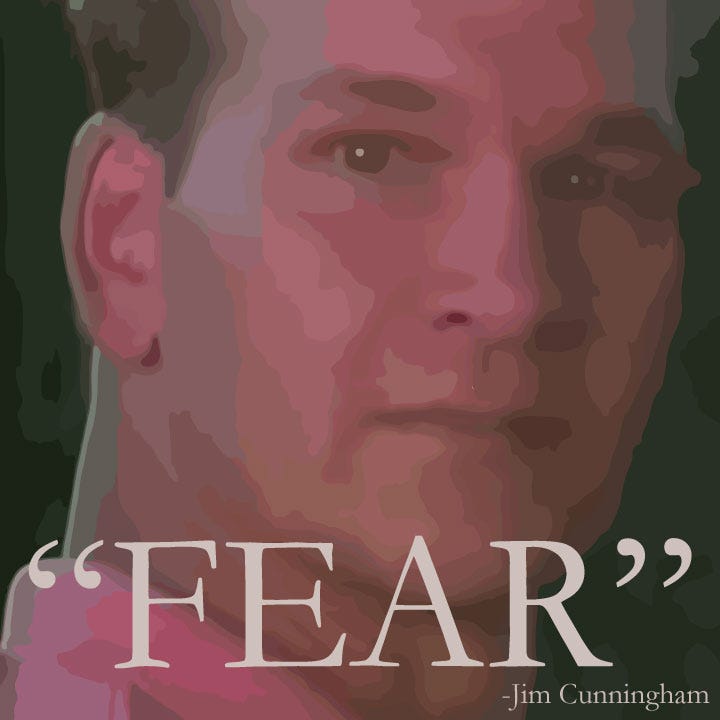
By 2001, Patrick Swayze was the guy from Dirty Dancing and Ghost, a safe, romantic leading man. Then Richard Kelly cast him as Jim Cunningham, a slimy self-help guru with a dark secret.
Swayze didn’t just play against type, he raided his own closet. The pastel sweaters and khakis weren’t costume designer inventions but Swayze’s actual ’80s wardrobe. Kelly later recalled Swayze showing him the clothes and saying, “This is what he’d wear.”
Gyllenhaal later described his performance as “brave,” noting how Swayze pushed into places most stars of his stature would avoid.
Cunningham lives on as meme fodder. His hokey “Fear–Love Lifeline” has been reborn as ironic shorthand for self-help platitudes.
Dark Etsy


For a film that underperformed theatrically, Donnie Darko spins out more merch than many mainstream blockbusters. Once it became a midnight screening legend, Frank the Bunny hopped right into the collectible economy.
NECA produced licensed Frank the Bunny action figures, which now fetch collectorlevel prices on eBay . Funko’s Dorbz line also includes stylized vinyl versions of Donnie. The Etsy and Redbubble universes are teeming with fan made Darko creations it feels like Donnie can be in the MCU
Unspooled Recommends
Primer (2004) Low-budget, brain melting time travel that makes Darko’s tangent universe look like a warm-up exercise.
Picnic at Hanging Rock (1975) Not sci-fi, but eerie and dreamlike in the same way, schoolgirls vanish on a field trip, and the movie never explains what happened.
Tell Us Your Theories about Darko and If it’s Transcedent or Just Alright
Paul’s Book Joyful Recollections of Trauma is 50% off at BARNES AND NOBLE In Store and Online - CHECK IT OUT