
Spectacle Is Never Enough
What Makes a Summer Blockbuster from the Directors who make them

Every summer, Hollywood bets hundreds of millions of dollars on an idea that they think will appeal to everyone, but despite their best intentions, that bet often fails (Remember The Emoji Movie). This is a deep dive into why Blockbusters work, from the people who make them; how the Studios keep learning the wrong lessons; and what Science says audiences want.
Most Summer Blockbusters are “High Concept” but in 1991 Jeffrey Katzenberg took that term to task (in his 1991 manifesto, Some Thoughts on Our Business) and his points remain true to this day.
The Lowdown on High Concept
One of the most misunderstood and misused phrases in the Hollywood lexicon is “high concept.” The phrase was introduced by Michael [Eisner] for internal use by creative executives at Paramount as a guide for evaluating ideas. But it quickly spread throughout Hollywood and has since been widely misinterpreted and abused.
“High concept” was intended to describe a unique idea whose originality could be conveyed briefly. The emphasis was supposed to be on “originality” but has come to be placed on “briefly,” so that today “high concept” is thought to mean an idea that can be summarized in a logline in TV Guide.
This is unfortunate, because “high concept” is a useful, complex, thoughtful encapsulation of what we should all be working toward. It makes a link between movie making and movie marketing. It embellishes the concept that “the idea is king” by asserting that the idea that forms the basis of a film should not only be one that is compelling but also one that can be communicated.
The real meaning of high concept is that ingenuity is more important than production values. This is why we should constantly be looking for creative solutions, not financial ones.
If we are looking for good and original stories why do modern blockbusters feel so flat and stale.
“Audiences Are Easy to Please If It’s a Good Story” — Spielberg

Jaws started the summer tentpole conversation in 1975, but when you look at it, it’s not about seeing a BIG ASS SHARK. Whether that was by choice or because the shark constantly broke down almost doesn’t matter. The end result works. You can argue that Bruce failing forced Spielberg to make a better movie, one that didn’t rely purely on the show stopping shark attacks but the key lesson isn’t build a better shark, it’s build a better story that works without the shark.
Sure the shark looms large in our memory, but the movie is really about people: the terror, the small‑town politics of Amity Island, the fragile economy built on summer tourists. It’s about a cop who’s afraid of the water, a mayor who’s afraid of losing business, and a fisherman who hates sharks. Real people, real issues, with a shark as the reason that they come together.
George Lucas, who usually gets co‑credit for inventing the modern blockbuster alongside Spielberg, has pushed back on the idea that they invented anything. He’ll point you to Gone with the Wind, James Bond movies, and those Irwin Allen disaster pictures where something large is always sinking or on fire. The blockbuster wasn’t invented in the 1970s; it’s the recurring attempt to create an event movie that feels bigger than whatever else is playing.
Here’s a list of biggest summer blockbuster for the last 50 years (this list is missing Inside Out 2 and Lilo & Stitch respectively) So what’s the core principle that unites all of these Blockbusters?


“The spectacle is the container, the story is the content.” - James Cameron
James Cameron has said that the real work is finding “a key into the heart of the audience” and expressing universal human experiences “in exotic new ways,” and that his challenge on Terminator 2 wasn’t to do bigger explosions, it was to make viewers cry for the Terminator. (And for the first time, not at Schwarzenegger’s acting.)

Even when he talks CG, he’s explicit that effects should be limited to what the story needs. If a sequence doesn’t add anything dramatically, adding more scale just makes the movie more expensive, not better. The spectacle is the container. The story is the stuff you pour into it.
Jon Watts echoes this when describing Spider-Man: Homecoming as “ a straight-up high school movie. It’s able to go from a very small story, and really emotional small stakes and just get bigger and bigger until it’s on a massive scale without ever losing sight of the story we were trying to tell.” Perfectly captured here as Peter Parker is nervously meeting his girlfriend’s dad for the first time when he realizes he is the Vulture. The stakes couldn’t be more personal and this scene might be better than any action sequence in the film.
The Russos add another piece in talking about directing the new modern blockbusters, Marvel Films. “These movies are so complex you need a unifying [piece], or a sense of cohesion, and that cohesion can come from a narrative construct that you can apply all the characters to.”
Let’s break down Captain America Civil War, the “narrative construct” is the Sokovia Accords and the question is “Should superheroes submit to government oversight?” Every character beat, and setpiece plugs into that yes/no choice: Tony’s guilt and need for accountability, Steve’s distrust of institutions and loyalty to Bucky, T’Challa’s grief and need for vengeance, even Spider‑Man’s point of view that he has to be involved because "When you can do the things that I can, but you don't... and then the bad things happen... they happen because of you."
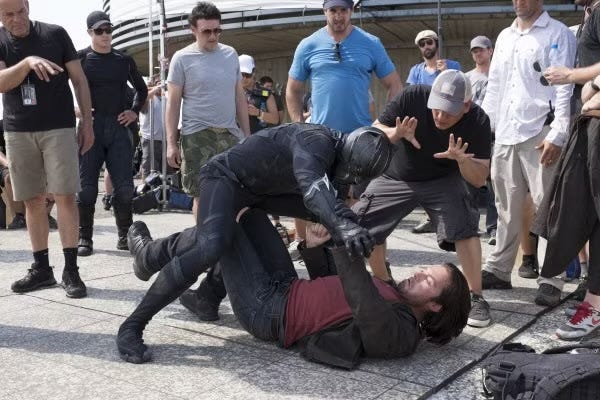
It seems like creatively everyone agrees and it turns out the science agrees too. Wharton marketing professor Jonah Berger didn’t set out to study blockbusters, but his team ended up proving what Spielberg, Cameron, and the Russos were all circling around (Incidentally, Dr. Morbius also agrees; sadly, he couldn’t save himself.)
THE SCIENCE OF A BLOCKBUSTER
Berger’s team, in their “Shape of Stories” work, analyzed tens of thousands of texts and found that stories that move faster with a smaller scope are liked more. A secondary study looked at around 30,000 movies, TV shows, novels, and fundraising pitches and found that stories with more, and more dramatic, turning points are more successful.
Movies with more turning points saw ratings increase by up to 1.4 stars out of 10 comparable to the impact of a roughly $40 million budget increase.
More dramatic plot reversals = More Money.

Film theorist David Bordwell, who has spent a career breaking down Hollywood storytelling works, agrees in his break down of Jaws. The real pivots aren’t the shark attacks. They’re the smaller decisions, not shutting down the beach, catching the wrong shark, not to hiring Quint and then hiring him after all. Each one of these small decisions spins the movie into a new mode without losing the central problem. It’s the same story, but it keeps feeling new.
The same research also talks about sentiment volatility, which I take to mean, those movies that give you more an emotional rollercoaster. The more sentiment volatility the more saudiences like them. Terminator 2 is perfect example of this. It veers from action to horror to slapstick. From John and the T‑800’s bonding to Sarah’s apocalyptic nightmares, to trying to outrun a unkillable machine which all leads to a finale that flips all that adrenaline into real grief when the T-800 lowers itself into the Molten Steel.
No where in the study do they find that people want MORE EFFECTS, BIGGER EXPLOSIONS, LARGER SCOPE.
So if the science says it’s not about money on the screen, and the filmmakers agree. Then why do so many blockbusters still get it wrong? Because the studios are thinking about money. The 2.5x rule is a Hollywood rule of thumb stating that a movie must gross approximately 2.5 times its production budget at the global box office to break even. So in attempt to recoup that you need to make your movie big and it’s gotta travel around the world. I’d argue making a movie that makes money around the globe, leads to thee studio’s want for spectacle over story.
From a studio Point of View, making a HIT MOVIE means your investors are going to be happy and your want to make them happy every year like clockwork which means you can’t miss your Summer Tentpole slots. So movies are greenlit before they are ready. Which means you might not even know what you are shooting as you are in pre production.
James Gunn has been vocal about his disdain for making "movies without a finished screenplay". He argues that this is the primary reason the industry is faltering. He even enforces a strict rule across his DC Studios projects that production cannot begin without a fully finished and polished script.
Now this seems like a NO BRAINER - You wouldn’t build a house without a blueprint. But many movies are being built as they are shooting. Because of that if you don’t know what you are making how can you market it. Eban Moss Bachrach recently told a story on Happy Sad Confused about appearing in Comic Con for Fantastic Four press event without ever shooting a day or fully knowing what the movie would be.
THE BROKEN BLOCKBUSTER
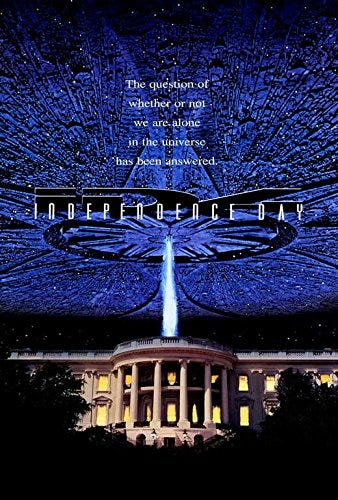
Movies are often built on one image, think the White House in Independence Day. But that image has to do a lot of work. Once again, the wrong lesson many BIG MOVIES are leaning into is “LOOK AT THIS” trailers and posters but we have to understand what we are looking at, what are the stakes. This ID4 poster sets up the stakes pretty easily but these for RIPD and Battleship not so much


Who are these RIPD guys fighting exactly? Ghosts? Zombies? It just kinda harkens to things we like - Ghostbusters and MIB but thats it. It’s hoping that my association with something else will sell me on this. Which brings us to IP.
Plus, so many summer bombs are built around IP or brands that never communicate “what this even is?” beyond your association to the product or IP.
Question: What was Battleship about? I don’t know. I just had to Google it, aliens attacking during a naval exercise, which is actually a “good” idea. But it has nothing to do with the board game (besides having Rihanna in it), so you’re selling me on a relationship to a product then immediately abandoning any ties to that product. And you don’t communicate that in the poster. It just looked like a bigger ship.
Analyses of mega flops like John Carter cite bad/muddled marketing, in which advertising combines grim stakes, quippy humor, and sentimentality into one movie.
But Paul, you just said that was GOOD! Yes, but not in the marketing; trailers and posters aren’t allowed to swing wildly between tones, they have to tell you, in one sentence and one image, what you’re buying.
Terminator 2 can be a horror movie, a comedy, a family story, and a tragedy over two hours, but its marketing campaign has to present a single, legible premise, a promise to the audience, that’s where so many would‑be blockbusters stumble. They’re chasing that “emotional volatility” in the trailer, but its so condensed it just comes off as confusion.
Watch the Trailers for John Carter and Terminator 2 back to back
The T2 trailer spoils the twist. You find out in the first act that the Terminator is now the good guy. But that’s exactly why it works. The premise IS the twist, and the trailer knows it. In 90 seconds you have a complete one-sentence promise: “The machine that tried to kill John Connor is now the only thing standing between him and something worse. You understand it and want to see how it plays out.
The John Carter trailer is just two minutes of battles, romance, jumping, aliens and you leave with nothing to hold onto. Not because the movie is bad (it is), but because nobody could tell you in one sentence what it was about or why you should care.
So if Summer Movies are High Concept, and can be pitched in one line but then why do we have such a hard time doing that to an audience. I think something bigger is at play, when you are aiming to make a blockbuster, you are trying to appeal to EVERYONE. Especially international audiences.
Once international box office became the main profit center, studios chased straightforward, universally appealing narratives that can easily translate across global markets and action that can transcend language barriers. Hence the rise of the Fast & Furious/Transformers model: thin plots, broad jokes, and enormous VFX sequences that read just as clearly in Beijing as in Burbank. The irony is that the more movies contort themselves to be everything for everyone, the less they feel like anything in particular.
This also isn’t an issue with just bad movies, great movies can be poorly marketed too.
Look at this poster for Popstar. A quick glance doesn’t tell you it’s a.) funny or b.) who’s in it? Plus it looks like a real Bieber poster! Why would you market your Lonely Island without telling people it’s a Lonely Island Movie, a Comedy or stars Andy Samberg, they eventually course corrected for additional materials.


Good Movies being badly marketted is a smaller group and eventually find their crowd but at the expense of its initial release. Movies like The Thing, Dredd, The Princess Bride, Innerspace, the list goes on and on. I could write a whole article on Tom Cruise’s LIVE DIE REPEAT/ THE EDGE OF TOMORROW debacle. I’d argue those movies are so self assured in what they are, that the studio wanted to open them to wider audiences and actually diluted the actual premise.
BARBENHEIMER ISN’T AN OUTLIER
But the Blockbuster is not dead! Movies like Top Gun: Maverick Barbie, Sinners. Everything Everywhere All at Once and most recently Project Hail Mary all break through.
Lets examine 3 Blockbusters that all were released in the same year. But lets start with the double feature that got everyone so excited, Barbie and Oppenheimer. On paper, they couldn’t be more different, but they both behave exactly like the movies Spielberg and Lucas are talking about: simple, grabby premise plus a big screen to play it on.
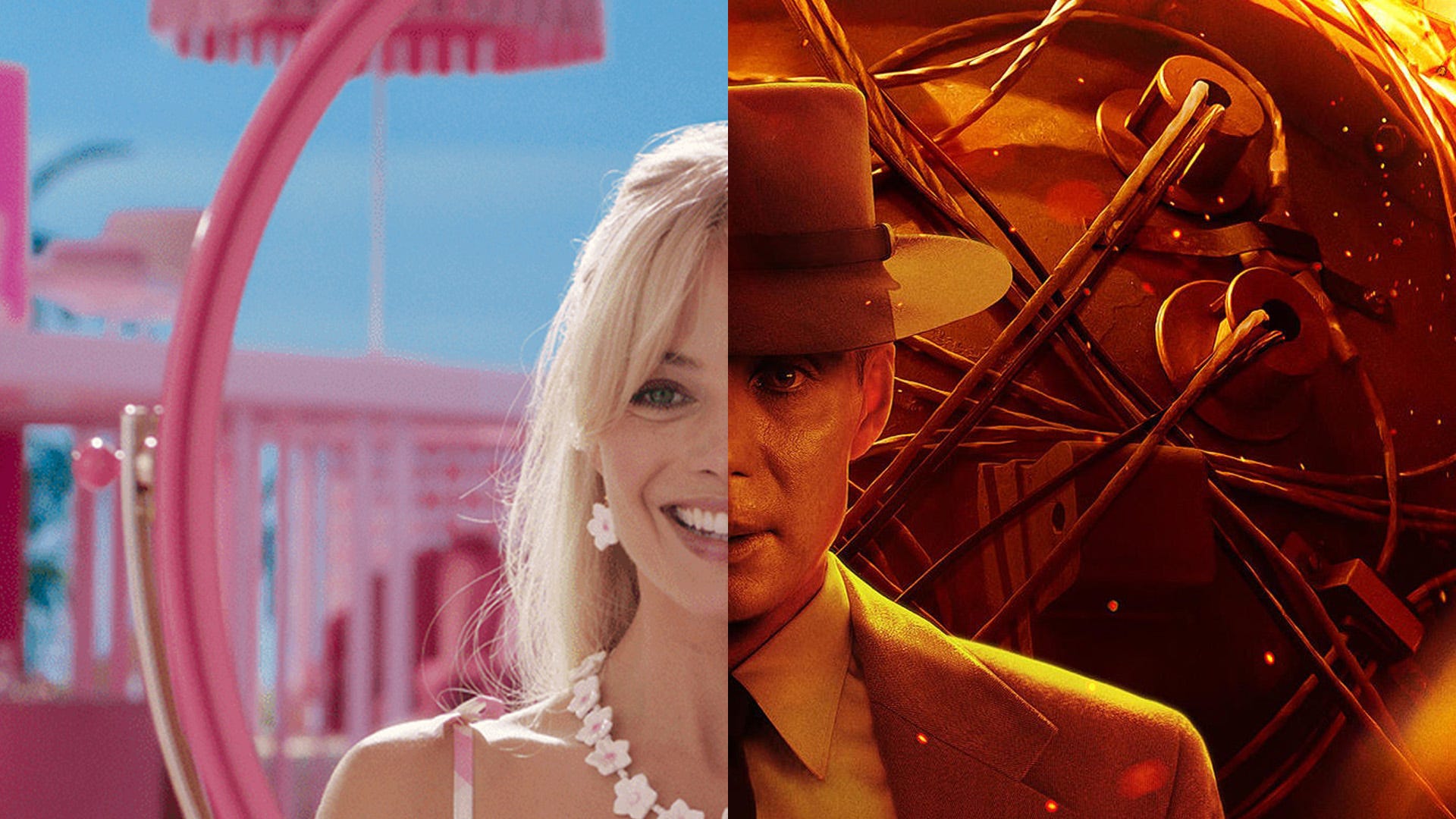
Barbie’s trailer had the perfect line, “If you love Barbie, if you hate Barbie, this movie is for you” acknowledges the entire spectrum of feeling about the brand and tells you the film nows what it is up against and is willing to have that fight. The posters that boiled it down even further, “She’s everything. He’s just Ken.” you understand their dynamic and the joke instantly.
Oppenheimer on the other hand is austere, serious, no IP. But the marketing still gives you a clean hook. Taglines like “The world forever changes” position it as a thriller even though you know the bomb goes off; the promise is that the movie will show you what it does to the man who built it.
Those two ruled the summer and left our 3rd blockbuster Mission: Impossible – Dead Reckoning Part One, another franchise that was supposed to rule the summer in the dust. It’s not that the movie forgot how to do spectacle or people had franchise fatigue; but when you watch the trailer it’s similar to that John Carter trailer, it’s promise felt weirdly fuzzy, “a new kind of threat” and then there is lots of running and cool motorcyle and train stuff, but they never give you a simple emotional question the way Barbie and Oppenheimer did “What if Barbie woke up sad?” or “What happens to the man who becomes death?” Add the “Part One” label on top of that, and in a summer of big, self‑contained events, it started to feel more like a really expensive prologue than something you had to see right now!
WHY DOES A SUMMER BLOCKBUSTER WORK?
First and most importantly, a finished script. Then you have to sell it simply and but also make it look grand. But it can’t be too generic either. Gore Verbinski (Pirates of the Carribean) brings the most important element into the mix, as a director, the work only feels interesting to him when “the wheels are about to fall off.” Essentially don’t play it safe. Greta Gerwig agrees about what she chooses, “I'm properly scared of it, which feels like a good place to start. I think when I'm scared, it's always a good sign. Maybe when I stop being scared, it'll be like, 'Maybe I shouldn't do that one.'
A true summer blockbuster sits exactly at that intersection. It’s something you immediately get in one line and then immediately wonder, “How the hell are they going to pull that off?
It’s a rare case where you really do have to judge a book by its cover, but the cover can’t just be the spectacle; it has to be the premise in disguise, one image and one line that hint at the mess of human stuff waiting underneath. That makes you ask how would I deal with this?
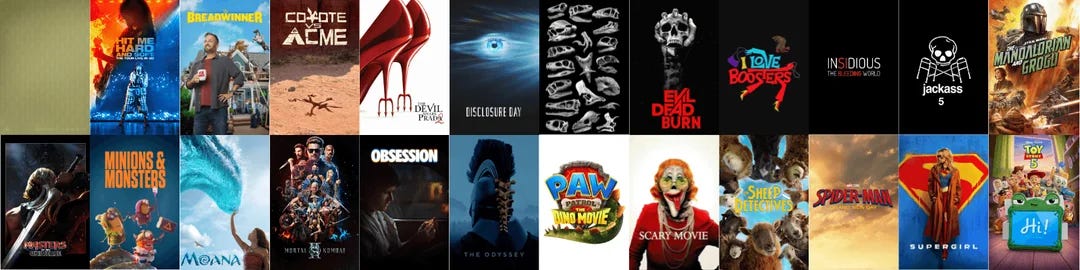
Which one of these says that to you?


Want Paul to sign and personalize a book just for you? It can happen

Great post that I will re-read before every screenplay or pilot spec I write.
Great read!