

TWILIGHT OR BUST
A Blockbuster Franchise from Indie Beginnings

This week on Unspooled
STEPHANIE MEYER’S STRICT GUIDELINES
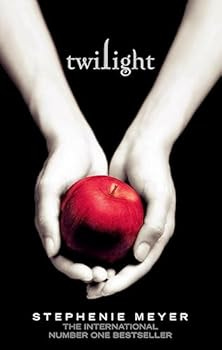
The Twilight book became a massive pop‑culture phenomenon, especially among teen and young adult readers, largely through word of mouth and online fandom rather than traditional literary prestige. It sold millions of copies worldwide, dominated bestseller lists, and inspired midnight release parties more commonly associated with blockbuster movies or video games. Which meant any adaptation needed to be faithful to the books. Author Stephenie Meyer maintained creative control through strict guidelines for the adaptation. She insisted:
- No clichéd vampire traits (garlic, crucifixes, stakes)
- Edward's famous line, "And so the lion fell in love with the lamb," must remain in the final cut
- A toned-down first kiss between Bella and Edward
- Kellan Lutz cast as Emmett (she disagreed with initial casting choices)
Meyer later reflected: "It's hard for me, but I'm glad of every time I did it."
Here’s a special little aknowledgement to the book’s famous apple cover (Don’t worry it’s cued up to the moment I just alluded too)
SUPERMAN AS A SUPER MAN
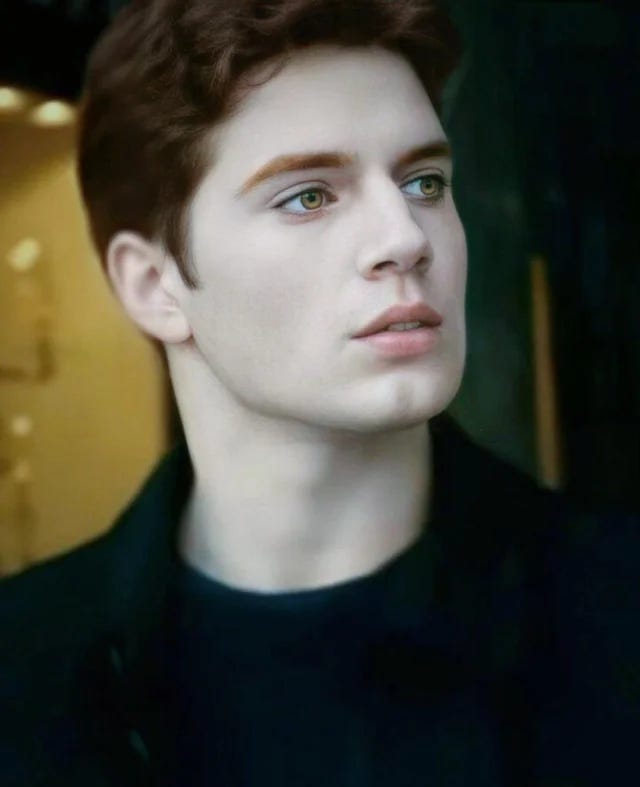
"The most disappointing thing for me is losing my perfect Edward. Henry Cavill is now 24 years old. Let us have a moment of quiet in which to mourn" - Stephanie Meyer
By the time Twilight entered production, Cavill, Meyer's ideal Edward, had aged out of playing a 17-year-old high school vampire. Meyer even suggested casting Cavill as Carlisle Cullen instead, joking about whether he'd "find out if blonds DO have more fun".
On Happy Sad Confused Cavill told Josh Horowitz "I didn't know about it at all. I didn't know about the movie. I wasn't aware they wanted to cast me, and the internet wasn't the resource it is now, so I only discovered it later. I thought, 'Oh OK, that would have been cool'
THE CASTING BED
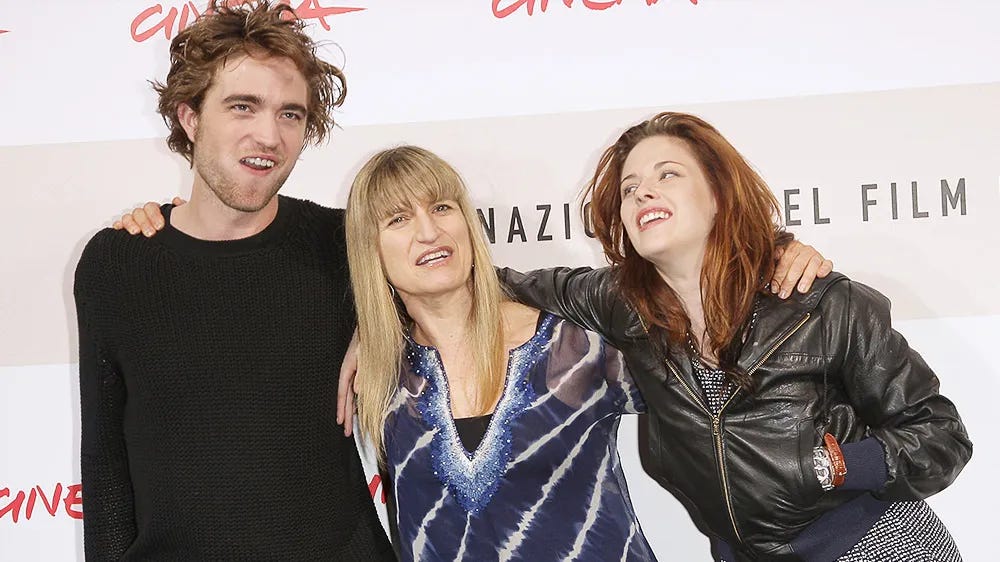
Pattinson arrived for his initial meeting looking unpromising. "He was a bit out of shape, his hair was all messy," Hardwicke remembered. But once the audition began, the chemistry between Pattinson and Stewart was undeniable.
"Rob and Kristen auditioned on my bed—the kissing scene—Rob was so into it, he fell off the bed," Hardwicke recalled. "I'm like, 'Dude, calm down.' I was filming with my little video camera at the same time," - Hardwicke
Hardwicke remained concerned about their four-year age difference—Stewart was only 17 at the start of filming, while Pattinson was 21. “I could tell they had a lot of chemistry.”
Check out their Chemistry here
WHY VAMPIRES?
Scholar Milly Williamson noted that vampires have become "associated with an urgent drive to signify discursively," making them particularly apt signifiers of romance ideology. Meyer's innovation was portraying "the nature of the vampire as the ideal, as something higher than human, rather than lower". In Breaking Dawn, Bella describes Edward as "more angel than human", inverting traditional vampire mythology where vampirism represented irrevocable damnation.
A VANISHING BUDGET w/ Fight Scenes
Just four days before principal photography began, Summit Entertainment slashed the budget by $4 million, dropping it from $41 million to $37 million. This last-minute cut forced Hardwicke to reimagine her approach entirely. The film was shot in Oregon in a mere 48 days. Hardwicke described the production as feeling "more like an indie film than a future blockbuster franchise".
The shortened schedule and the lack of money lead to inadequate stunt rehearsal and thiks infamous scene of Pattison not being able to do a somersault:
BUILDING A MEADOW
For the film's most iconic scene, Edward revealing his sparkling skin to Bella in a sunlit meadow, Hardwicke scouted a perfect location by a river in Oregon, moving the scene to the end of the shooting schedule to capture optimal spring weather.
Two weeks before filming, the location was buried under more than 12 feet of snow, with fallen trees blocking access
"I was so stressed out, as you can imagine. Running around shooting all week, freezing, and trying to find another place" - Hardwicke
The crew found a replacement location featuring upturned boulders and old-growth trees covered in moss, "gorgeous," but "doesn't really look like a meadow".
After wrapping principal photography, Hardwicke begged the studio for additional time. She ultimately shot supplemental meadow footage in Griffith Park Golf Course in Los Angeles, where the crew trucked in grass, rocks, and moss to create the perfect Oregon meadow.


WHAT GOT CUT?
Fans lamented some specific missing moments that were shot but cut for time. Like Carlisle and Esme actually interacting.
Another cut scene featured more of Charlie comforting Bella after nightmares, showcasing his attempts to be a more caring father.
THANKS, HERE’S A CUPCAKE
Despite Twilight's massive success earning $407 million worldwide from a $37 million budget and giving Hardwicke the biggest opening weekend ever for a female director, Summit Entertainment did not invite her back to direct New Moon.
Hardwicke described entering a room filled with congratulatory gifts for the studio after the film's success. "I [went] into a [room] with all [the] gifts, everybody was congratulating the studio," she said. Her only gift? "A box containing a mini cupcake".
The official reason for Hardwicke's departure was "timing conflicts". Summit offered her "more money than I or anyone in my family has ever seen," but the conditions were untenable. The studio wanted New Moon produced on an even tighter schedule and budget, with virtually no time between finishing Twilight's post-production and promotion and beginning New Moon's pre-production.
"I didn't think I could make a good movie under those circumstances," Hardwicke explained. Chris Weitz (About A Boy, The Golden Compass) replaced her just days after the announcement. Unlike Twilight, New Moon received mostly negative reviews, and Weitz didn't return for subsequent films either.
LEGACY
By 2021, all five Twilight films became "the most-watched movies" on Netflix.
But despite massive commercial success, Twilight faced "extraordinary critical derision which then opened a conversation about cultural biases rather than about the material itself. Why was this material different than a Star Wars or superhero films?
As the series grew these traditionally “nerdy” behaviors even became more mainstream. From Midnight Screenings, to public shipping wars (Team Edward vs. Team Jacob). This film showed that super fans were cool and evolving from the view of dudes in their parents basements.
Modern analyses recognize Twilight's complex legacy: "It might not be [perfect], but it tells young girls that they can like cool things and still be girly, and that they can write their own stories". The franchise's influence on Young Adult fiction is undeniable.